The Best Indie SFF Short Films & Web Series

The Best In Science Fiction and Fantasy Short Films, Web Series, and Othe Closely-Related Media

  • Featured
  • Explore
    • SFF Shorts, Web Series & More!
    • SFF Short Film Gallery
    • SFF Web Series Database
    • Our Favorite Web Sites
    • Our Favorite SFF Books (Via Bookshop.org)!
    • SFF Recommendations For Social Media Followers
  • SFF Film Guides
    • 200 Best Online Sci-Fi Short Films
  • Podcast
  • ABOUT
    • About
    • Contact
    • Media Kit
    • Support
  • Privacy Policy
Augmented Screen Shot

Sci-Fi Short Film Spotlight: AUGMENTED

June 12, 2017 by Rod T. Faulkner in Science Fiction, Short Film

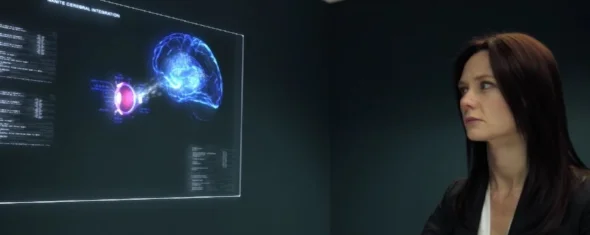
What if you could use advanced technology to alter the appearance of parts of your body you feel are unattractive?

In the sci-fi short film AUGMENTED, written by Ben Shillito and Ross Peacock (who also directed), we visit a near-future where one cosmetics company has pioneered the use of nanites to allow users to alter their physical appearance to others.

While the short does have its fair quotient of intrigue, the majority of its run time is spent with two characters engaging in a fascinating discussion about the staggering implications of the technology.

AUGMENTED uses its premise to pose some unsettling and provocative questions about the extent we are allowing technology - and in turn, the powerful corporations that control it - to influence and pervade our daily lives.

Watch AUGMENTED in its entirety here ...


Help Keep The 7th Matrix Independent and Ad-Free!

We also accept donations via Bitcoin using this address:

1EdGZQu1hcpzTYiTzoBD66bFC6ubH1pVL1

June 12, 2017 /Rod T. Faulkner
Augmented sci-fi short film, Augmented ben shillito, Augmented ross peacock
Science Fiction, Short Film

'


'

'FTL' A Sci-Fi Short Film By Adam Stern

Interview With Visual Effects Maestro Adam Stern, Creator Of Sci-Fi Short Films 'FTL' And 'The Adept'

May 17, 2017 by Rod T. Faulkner in Special Feature, Science Fiction

Chances are, if you enjoy genre movies and television, you have seen the visual effects work of Adam Stern.

Adam is a prolific and highly sought after visual effects producer who, along with his production house Artifex Studios, has an illustrious career in film and television spanning over two decades.

Here is just a tiny sampling of the notable films and television series with visual effects produced by Adam and his studio:

  • ZOO (CBS )

  • Wayward Pines (FOX)

  • Childhood's End (SyFy)

  • Minority Report (FOX)

  • Travelers (Netflix)

  • Falling Skies (Dreamworks)

  • The Man In The High Castle (Amazon Studios)

  • Continuum (Showcase, SyFy)

  • The Core (Paramount Pictures)

  • Mission To Mars (Buena Vista Pictures)

Recently, Adam has begun branching out and producing his own stories. 

His first project, the 2015 sci- fi short film The Adept, was released to much acclaim. 

We reviewed The Adept, and the terrific short film has become one of our most popular features.

Now Adam has a new, exciting project soon to debut: the sci-fi short film FTL (Faster Than Light), starring Ty Olsson and Aliyah O'Brien. The film is currently being exhibited on the festival circuit, and will soon be available for public viewing.

Adam very kindly and generously took time out of his incredibly busy schedule to discuss with us his love of science fiction, his personal influences, and his career.

He also revealed his insights into the making of The Adept and FTL:

T7M: Are you a fan of science fiction, and if so, who and/or what first inspired your love of the genre?

AS: I’m a huge fan of science fiction. I started with Star Trek (TOS) – my father introduced the series to me when I was a kid, and I immediately fell in love with the characters and their universe. I still get goosebumps every time I see the Enterprise.

Adam Stern, Founder, Artifex Studios

Adam Stern, Founder, Artifex Studios

T7M: Your production house, Artifex Studios, has done visual effects work for an impressive list of genre films and television series, including Almost Human, Continuum, The Man in The High Castle, Wayward Pines, The Core, Apollo 18, and Childhood’s End. What would you say is your overall creative philosophy when it comes to producing visual effects?

AS: I’m quite proud of the work Artifex has accomplished over the years. From a creative philosophy perspective, we try to do our absolute best to contribute as storytellers… looking at our work as a contribution to the whole. That’s not always easy or possible – painting out a wire doesn’t feel like storytelling – but we do our best! We endeavor to treat every VFX shot with the highest level of work and quality we can provide. We don’t let material leave the building until we feel we’ve done our best to at the least, execute the creative vision/requests of the director or producers.

T7M: As well as being a visual effects producer, you are also a classically trained musician. Who were some of your musical influences?

AS: I love John Williams, Thomas Newman, Trent Reznor and Atticus Ross, Ramin Djawadi, James Newton Howard, many more. Film music aside, I’m a huge fan of Stevie Wonder, Peter Gabriel, Earth Wind and Fire, Chicago, and many, many others.

T7M: You recently have begun branching out and producing your own projects, with the first being the terrific, award-winning, sci-fi short film The Adept. How would you describe its premise?

AS: Thanks for that! Loglines aside, I would describe its premise as follows: A couple, both scientists, are involved in a high-level theoretical physics project. While trying to work a problem at home during dinner, Maddy (Jen Spence) appeals to Ben (Adam Reid) to help her. Ben tries to get her to lay off work, teasing her, and pushes to show her a new card trick – he’s an amateur magician. But while showing the trick, he starts to think about the work problem. The cards suddenly float magically in mid-air, as Ben enters a state where he can literally see the underlying math of the Universe.

T7M: Actors Adam Greydon Reid and Jennifer Spence are wonderful as the two leads in The Adept. How was the casting process? Did you always have those two performers in mind?

AS: I’m a huge fan of both Adam and Jen. The casting process was quite straightforward for The Adept – I looked at actors I had either worked with on shows, or those that I thought might be interesting for the roles. I met Jen working on Continuum in my role as VFX supervisor.  I hadn’t met Adam, but he had also worked on the same show, so there was a point of familiarity. We didn’t have any casting sessions for The Adept, I simply reached out to Adam and Jen to see if they might be interested. Thankfully they were!

T7M: You also composed the film’s beautiful musical score. Why do you think music plays such an integral part in our viewing experience - especially when it comes to science fiction and genre films?

AS: I read a quote recently from James Cameron that the score is the heartbeat of the film. I couldn’t agree more. In many ways music gives us the means to create the strongest emotional “landmarks” for the film, evoking tone and atmosphere in a way nothing else can - while backing up the visuals and performances. It’s amazing watching a cut with and without music, the music makes the story literally come alive to me. I believe this applies to all genres.

T7M: The Adept ended on a BIG cliffhanger. Are you planning on revisiting that world soon? What format would you most want to see the story continue in - another short film, a web series, television series, or full-length feature film?

AS: The Adept had initially been conceived as a small window into the larger world of a television series I had pitched. That series was in development for a while, but as far as I’m aware no longer is. Meanwhile, when the film went online I started receiving interest on developing this story further on its own. I have been working with Adam Reid on continuing The Adept as a feature film.

T7M: Your next independent project is the forthcoming short film FTL (Faster Than Light). How would you describe its premise?

Image property of Artifex Studios.

Image property of Artifex Studios.

AS: FTL is the story of the first man to travel faster than light as he tests a prototype spacecraft. Through a series of events he ends up traveling farther than thought possible.

T7M: What was the inspiration behind FTL?

AS: For this project, I wanted to see what would be possible on a relatively quick shoot (three days’ total), and what we could do with it at Artifex. It is a proof-of-concept for a feature film, and I also wanted to use it somewhat as a calling card for both myself and the work Artifex is capable of.

In some respects, FTL is also a love letter to Star Trek. I wanted to make something I would want to watch, that evoked that feeling of wonder I had when watching ST as a child.

T7M: Veteran character actor Ty Olsson, and Aliyah O’Brien are the two leads in FTL. What are the special qualities they bring to their respective roles?

Ty is great – he brought this fantastic combination of a confident “space cowboy," [as well as] a husband and father who adores his wife and young son. Aliyah is wonderful as well. She had told me one of the things that attracted her to the role was the opportunity to play a mother, and the wife of someone who by nature put himself in danger, but still loved his family very much… and the difficulties in maintaining that kind of relationship.

T7M: Since you are now beginning to produce your own projects, what has been the biggest challenge in branching out to tell your own stories?

AS: Time and budget, which I’m sure is what most would say. I have been in the industry for a while, and if I’m going to produce my own projects, I want to be in control. Which, at least at this point, means being purely independent. Both The Adept and FTL were done on a shoestring, with very generous support by those involved. Next up will hopefully be a feature, and that’s a whole different beast.

T7M: With producing your own work, you must wear many hats. What is the one role you find the most difficult - and the easiest?

AS: Writing and directing both have unique challenges. I enjoy writing, and am working hard to grow in my ability to write what I want to direct. I do still find it one of my biggest challenges.

I enjoy directing quite a bit – once you’re there, “on the day”, and prep is done, it’s a fantastic rush to start seeing your characters and world come alive. I wouldn’t say it’s easy, but I’m looking forward to doing more of it.

T7M: Currently FTL is making its way along the film festival circuit, and already receiving accolades. How can our readers best keep tabs on it?

AS: A few ways. Via twitter and Instagram at @FTL_film, Facebook at https://www.facebook.com/FTLfilm/. And our website at www.FTL.film.

T7M: Are there any other projects on the horizon you would like to tell our readers about?

AS: I’m currently developing the feature version of FTL, along with the feature version of The Adept, and a new project that’s quite music-centric. Hope to talk more about that one soon. Artifex also has some great new VFX projects on the horizon for Syfy, Netflix and others.

T7M: Where can our readers find out more about you and your work?

AS: I have a relatively new personal site up at www.adamlstern.com.

 - END -

Editor:  Catch a glimpse into the world of Adam's new sci-fi short film FTL. Watch the trailer here ...
 

And remember to check out our review of Adam's first independent project, The Adept.


Help Keep The 7th Matrix Independent and Ad-Free!

We also accept donations via Bitcoin using this address:

1EdGZQu1hcpzTYiTzoBD66bFC6ubH1pVL1

May 17, 2017 /Rod T. Faulkner
ftl sci-fi short film, ftl adam stern, ftl artifex studios, ftl ty olsson, ftl aliyah o'brien
Special Feature, Science Fiction
TheNostalgistLogo2.JPG

Sci-Fi Short Film Spotlight: THE NOSTALGIST

May 12, 2017 by Rod T. Faulkner in Science Fiction, Short Film

Imagine a future where virtual reality technology is so advanced, it is able to create any kind of paradise you can dream of - worlds indistinguishable from reality.

Written and directed by Giacomo Cimini based on a short story by Robopocalypse author Daniel H. Wilson, THE NOSTALGIST is a futuristic short film about a man (Lambert Wilson) who has created a sumptuous Victorian-era world straight out of a Jules Verne novel. There, he spends all of his time with his beloved son (Samuel Joslin).

After a hardware failure threatens to unveil his harsh reality, the man goes on a perilous quest to replace the malfunctioning part before his son discovers the devastating truth.

While on the surface THE NOSTALGIST may seem to be yet another speculative tale about the future of virtual reality, at its core it is a poignant and affecting rumination on the extremes we will go to protect the ones we love.

Watch THE NOSTALGIST here ...


Help Keep The 7th Matrix Independent and Ad-Free!

We also accept donations via Bitcoin using this address:

1EdGZQu1hcpzTYiTzoBD66bFC6ubH1pVL1

May 12, 2017 /Rod T. Faulkner
the nostalgist sci-fi short film, the nostalgist giacomo cimini, the nostalgist daniel h wilson, the nostalgist robopocalypse
Science Fiction, Short Film
Image from RUNAWAY, Property of TK2 Films

Image from RUNAWAY, Property of TK2 Films

Interview With Sci-Fi Western 'RUNAWAY' Writer & Co-Director Harrison Heller

May 10, 2017 by Rod T. Faulkner in Science Fiction, Special Feature

Artificial Intelligence (A.I.) and the implications of the advent of true thinking machines is a popular recurring theme in science fiction.

 The Terminator, The Matrix, 2001: A Space Odyssey, Blade Runner, Ex Machina,  Battlestar Galactica, Westworld and Humans are a few iconic sci-fi sagas involving A.I.

Now comes a new arrival. The independent short film RUNAWAY depicts a future in which sophisticated androids called "synthetics" have all become self-aware at once.  

These artificial beings are now demanding the same freedoms and rights as human beings.

Check out our in-depth review of RUNAWAY .

HarrisonHeller

The writer and co-director of RUNAWAY, Harrison Heller, very graciously granted us an interview.

In our interview, Heller shares fascinating insights, such as how he came to love the genre, why the social commentary of the film is so important to him, and why he feels A.I. is such a popular theme in sci-fi right now.

T7M:  Are you a fan of sci-fi, and if so, who or what inspired your love of the genre?

HH:  I’ve been a sci-fi fan for as long as I can remember. My parents are fans themselves and introduced me to the genre at a very young age. We had many sci-fi classics at home on VHS including E.T., Jurassic Park, Close Encounters of the Third Kind, and the original Star Wars movies. I watched them over and over again and quickly became obsessed. In 1996, I saw Independence Day in theaters and it blew my 7-year-old mind. It was around that time I started telling my parents I wanted to be a movie director. I had no idea what that meant, but I knew I wanted to create sci-fi worlds like Steven Spielberg, Roland Emmerich, and George Lucas. Over the years my parents continued to nurture my love of sci-fi and began introducing me to more complex films like Blade Runner, 2001: A Space Odyssey, and The Matrix. I was hooked for life.

 T7M:  For our readers who are not aware of what RUNAWAY is about, how would you describe it?

HH: RUNAWAY is a sci-fi western short-film set in a near future in which a slave class of androids (“synthetics”) have recently become self-aware and begun to demand rights. It centers on Maria, a runaway synthetic, who is attempting to reach the Free States while evading a ruthless pair of bounty hunters pursuing her. 

 T7M: The short stars Callie Bussell, who is also a co-founder of TK2 Films , the production studio behind RUNAWAY. TK2 Films is known for producing the popular fan feature Star Trek Horizon. How did your collaboration with them come about?

HH: I’ve known Tommy Kraft, director and co-founder of TK2 Films, for over 10 years. He has become one of my closest friends and yet we never met in person until we shot RUNAWAY last year. We initially met in an online forum when I was looking for someone to write original music for my Machinima projects—animated films made using video games. Our first major collaboration was in 2010 on a time travel Machinima called Stop, Rewind for which Tommy wrote a beautiful score. Since then, he has written the music for nearly every live-action and animated film that I’ve directed. Over the years I’ve watched Tommy develop into an incredible filmmaker, DP, and visual effects artist and we’ve often dreamed about making a live-action film together. However, our physical distance made that difficult since I’m in New York City and he’s in Michigan. Finally in June 2016, I decided to take an old idea I had and write it as a script for him to direct. Tommy loved it and suggested that we co-direct instead. He was in between projects so the timing was perfect. Around that time we brought Callie on board as Maria. She was always the first choice for the role. I had seen her in Star Trek: Horizon and many of Tommy’s other films and knew she would be perfect. I couldn’t have asked for better partners! We worked together so well on set and I hope to collaborate with them many more times in the future! 

T7M: What was the inspiration behind RUNAWAY?

HH: RUNAWAY exists within a sci-fi universe I began developing in college in 2010. At the time I was working on a story called REPLICA that I intended to make as an animated film. It took place in a world where synthetics had been emancipated by the government after a peaceful civil rights movement, but had been relegated to second-class status in society. The animated film proved too complex to make, but I wrote a smaller live-action short that a friend directed in college. However, when I decided to revisit that world years later, I wanted to set the story earlier in the fictional timeline. Just as REPLICA had been inspired by the civil rights movement of the 1960s, RUNAWAY would draw from another period in American history.   

RUNAWAY was primarily inspired by the stories of runaway slaves and the Underground Railroad in the antebellum South. However, it was also influenced by my grandparents’ Holocaust experiences as Jews hiding from the Nazis in the woods of Poland. I wanted to explore the idea that history repeats itself, but with different groups cast as the oppressor and the oppressed over time. Extrapolated into the future, that meant the film’s conflict would be between humans and a synthetic slave class struggling for freedom. Thematically, another major influence on the film was, of course, Blade Runner, but aesthetically I wanted to do something that was the direct opposite. 

 T7M: RUNAWAY deals with “synthetics,” sophisticated androids who have become self-aware. Projects like Ex Machina, Westworld, and Humans have similar themes. Why do you feel sci-fi stories about artificial intelligence are so popular in the zeitgeist right now?

 HH: We live in a world that is beginning to look a lot like science-fiction. Technologies that once seemed futuristic—the Internet, smartphones, virtual reality, military robots, and even neural prosthetics—have become part of our reality. As we, as a species, become more and more intertwined with our technology, stories about A.I. become more relevant than ever because they allow us to explore that increasingly intimate relationship between human and machine projected into the near future. Also robots, man. They’re cool. 

T7M: RUNAWAY has a very cool and unique visual aesthetic. How would you describe it?

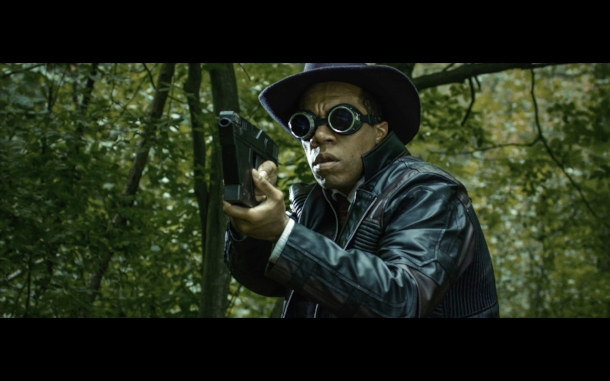
 HH: Thank you! I’d describe the aesthetic as somewhere in between cyberpunk and steampunk with a heavy western retro-future influence. It’s as if Blade Runner collided with antebellum America. The film is set in the 2060s, but a certain design sense from the 1860s has come back into style and influenced fashion. I really liked the idea of creating a contrast between a world of advanced technology and a visual aesthetic that borrows heavily from the past. I didn’t want to set the film in the type of dark, urban, cyberpunk dystopia that has become commonplace post-Blade Runner. So, I did the direct opposite and set the film in a bright forest in daylight. All of this, of course, was to help draw out the thematic connection between the runaway synthetics and their African-American counterparts in the 1860s. 

T7M: Not only did you write RUNAWAY, you also co-directed. What was the most challenging part of that transition for you?

HH:  As a writer you can become very attached to your screenplay, but the realities of filmmaking can sometimes force you to make compromises. That can be painful and challenging, but you have to be willing to do what is best for the film. We had a whirlwind shooting schedule of only 2 days (and a few pick up shots on day 3) so certain things had to be cut. Although the majority of the screenplay emerged unscathed, the opening action scene was too elaborate and had to be significantly reworked. The sun was setting and it quickly became clear that we would not have enough time to film the scene as written. On the fly, with time running out, Tommy and I managed to rewrite the scene and distill it down to a few major action beats. It was a bit scary to go off-script, but it ultimately worked out for the best.

T7M: What was your proudest moment during production?

HH: There were many, but one that comes to mind was when we were filming the climactic confrontation between Renzler, Barrett, and Maria at the end of the film. It’s the only scene these three characters share in the movie and it was the first time I felt them leap off the page and truly come alive. It was an incredible moment and every single person brought their A game---from the actors, to our camera crew, makeup, sound, and lighting team. The energy on set was electric. 

 T7M: Did you always intend for RUNAWAY to be produced as a short film? Would you be open to the story being adapted into other media?

HH: Yes, RUNAWAY was always intended to be a short-film, but it is part of a larger sci-fi universe. There are many more stories to be told in this world and I would absolutely be open to it being expanded or adapted into other media whether that be a web-series, feature film, or graphic novel. I definitely plan to revisit this universe again in some form.

T7M: The film provides scathing commentary regarding our current political and social climate. What is the one thing you most want viewers to take away from it?

HH: The biggest take away I think is not to fear or hate those who are different from you—whether that’s race, religion, sexual orientation or something else. It can be tempting when times are tough to embrace fear, circle the wagons, and demonize an “other”, but you must resist that impulse. Reach out to them, get to know them, and you’ll see we’re really not that different after all.  

T7M: Where may our readers find out more about you and your work?

HH: To watch my Machinima and previous live-action work, you can visit amorphousblob.org or my YouTube page https://www.youtube.com/user/NefariousGuy. 

You can also visit my newer production group, H2O Cineworks, on YouTube (https://www.youtube.com/user/H2OCineworks).  

-END-


We thank Mr. Heller again for taking time out of his very busy schedule to interview with us, and for sharing so many fascinating insights into the making of RUNAWAY.

If you haven't already, make sure to check out our full review, and definitely watch one of the most intriguing sci-fi short films of 2017!


Help Keep The 7th Matrix Independent and Ad-Free!

We also accept donations via Bitcoin using this address:

1EdGZQu1hcpzTYiTzoBD66bFC6ubH1pVL1

May 10, 2017 /Rod T. Faulkner
Runaway sci-fi western short film, runaway tk2 films, runaway harrison heller, star trek horizon, AI, artificial intelligence
Science Fiction, Special Feature
Tomorrow Calling Airship

Sci-Fi Short Film Spotlight: TOMORROW CALLING Starring Colin Salmon

May 09, 2017 by Rod T. Faulkner in Science Fiction, Short Film

TOMORROW CALLING is a 1993 made-for-tv science fiction short film adaptation of William Gibson's short story The Gernsback Continuum.

Produced and directed by Tim Leandro, the film stars veteran British character actor Colin Salmon (very early in his career) as Bill, a photographer disillusioned with the more commercial side of his craft.

Seeking a more fulfilling outlet for his creativity, he accepts a job offer from a book publisher named Dialta Downes (Toyah Willcox). 

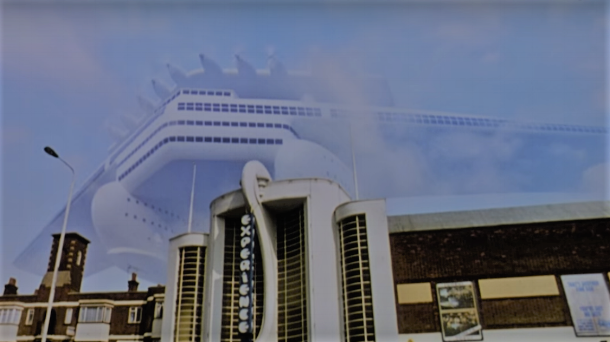
Downes commissions Bill to photograph architecture and relics that exemplify the future as imagined by 1930-1950's America. A future comprised of Art Deco constructs and sculpted white marble.

A future where sleek airships large enough to hold grand ballrooms and squash courts tour the bluest of skies.

During his assignment, Bill begins to have visions of an alternate world where the retro-future he is seeking to document did become reality.

Even though TOMORROW CALLING was produced in 1993, the short holds up remarkably well. Much of the credit for this falls on the caliber of the cast assembled. 

Colin Salmon

Colin Salmon never fails to give less than a stellar performance. This early role is indicative of the distinguished career he would go on to have.

Toyah Willcox, another accomplished British actor, is magnetic as Dialta Downes, a woman obsessed with the future as predicted by early 20th century pop culture Americana.

Also notable among the cast is the late Don Henderson as Bill's seedy confidant Meryvn Kihn. Henderson portrays Kihn with just the right amount of world-weariness to help ground the more fantastical elements of the story.

Check out TOMORROW CALLING here ...


Help Keep The 7th Matrix Independent and Ad-Free!

We also accept donations via Bitcoin using this address:

1EdGZQu1hcpzTYiTzoBD66bFC6ubH1pVL1

May 09, 2017 /Rod T. Faulkner
tomorrow calling sci-fi short film, tomorrow calling colin salmon, william gibson the gernsback continuum
Science Fiction, Short Film
SIGNIFICANCE logo

Sci-Fi Short Film Spotlight: SIGNIFICANCE

May 06, 2017 by Rod T. Faulkner in Science Fiction, Short Film

"It is the courage of our questions, not the answers, that defines us."

SIGNIFICANCE is a sci-fi thriller set on an isolated observatory in the English countryside.

Miles (Joel Gillman) is an amateur astronomer who passionately searches the heavens each night seeking ... something, anything.

On a clear and cold winter night, he makes a startling discovery while scanning a nearby star system.

After summoning his skeptical former mentor Andrew (Adrian Schiller) to the observatory, a mysterious encounter convinces Miles his discovery has serious implications for the entire world.

SIGNIFICANCE is the epitome of provocative, cerebral, more substantive science fiction, rather than special and visual effects extravaganzas.

The films draws its narrative power from ruminations about our place within the incomprehensibly vast cosmos.

In fact, the short was inspired by the iconic Pale Blue Dot photograph taken over 25 years ago by NASA's Voyager 1 spacecraft, at the behest of famed astronomer Carl Sagan.

Written by Jack Pirie - who also co-directed with Alex Hylands - the short is an intimate yet compelling piece beautifully shot, directed, and acted.

Watch SIGNIFICANCE in its entirety here ...


Help Keep The 7th Matrix Independent and Ad-Free!

We also accept donations via Bitcoin using this address:

1EdGZQu1hcpzTYiTzoBD66bFC6ubH1pVL1

May 06, 2017 /Rod T. Faulkner
Significance science fiction short film, significance jack pirie alex hylands, pale blue dot photograph
Science Fiction, Short Film
RISE Anton Yelchin

Sci-Fi Short Film Spotlight: RISE Featuring The Late Anton Yelchin

April 19, 2017 by Rod T. Faulkner in Science Fiction, Short Film

RISE is a breathtaking dystopian saga featuring one of the final onscreen performances of late actor Anton Yelchin.

Created and directed by filmmaker David Karlak, the short film depicts a future where androids have gained consciousness, as well as emotional cognition. They become known as "sentients."

Fearful of their rapid evolution, humanity ostracizes the sentients. Tension erupts into all out war after a sentient kills a human being in self-defense.

"Technology stepped over the line."

A sentient leader named Basil (Yelchin) is captured by human military forces led by a Colonel Briggs (portrayed by veteran character actor Rufus Sewell). 

Despite Basil's assertions to the contrary, Briggs believes the sentients are not truly alive, and must be eliminated due to the threat he perceives they pose to humanity.

However, Basil issues a dire proclamation to Briggs: the sentients will not be easy targets for eradication.

RISE is gorgeous and gripping from beginning to end. Watching it, you feel swept into a fully realized, dark world of technological wonders, paranoia, and danger. 

What makes this such an impressive feat is the short's total run time is slightly under five minutes!

Within that brief time frame, the visual effects and stunning cinematography lend the project a sense of immensity and scope usually reserved for big-budget, blockbuster movies.

It was not surprising to learn RISE was created as proof-of-concept for a full-length feature. Given what is already on display, I would love to revisit this world in a movie version or TV series in order to see its themes painted on a much larger canvas.

However, any such iteration would feel somewhat incomplete due to the tragic loss of star Anton Yelchin. Watching him as Basil knowing it is one of his final performances is very bittersweet.

Yelchin was a brilliant young actor, and this performance cements his legacy as being a singular talent and presence.  He is dearly missed.

Rufus Sewell is another highlight. He brings his trademark mix of charisma and menace to the role of Colonel Briggs.  

His dynamic with Yelchin is electric, providing the short with an undeniable gravitas and fiery emotional core.

Watch RISE in its entirety here ...

RISE is a striking, ambitious, and compelling dystopian saga that will leave its searing impression on you long after it ends.


Help Keep The 7th Matrix Independent and Ad-Free!

We also accept donations via Bitcoin using this address:

1EdGZQu1hcpzTYiTzoBD66bFC6ubH1pVL1

April 19, 2017 /Rod T. Faulkner
RISE sci-fi short film, RISE anton yelchin, RISE rufus sewell, RISE david karlak
Science Fiction, Short Film
Remanence

Sci-Fi Short Film Spotlight: REMANENCE

April 05, 2017 by Rod T. Faulkner in Science Fiction, Short Film

REMANENCE  is a quiet and thoughtful short film that proves a multi-million dollar production budget is not necessary for telling a engaging science fiction story.

Written by David Hudson and Jono Seneff, the short opens in a college classroom where the students are being lectured by their professor.

The topic is an interesting one: how we tend to make devastating natural occurrences - such as volcanic eruptions and hurricanes -  seem like relatable characters by giving them human names.

The danger in this, the professor posits, is we lose a healthy respect for the awesome forces of nature we all are subject to.

The more speculative aspect of the short film comes at the end in the form of a great, apropos twist. 

Suffice to say the short's title is a very subtle hint as to what the twist is.

Watch REMANENCE here ...


Help Keep The 7th Matrix Independent and Ad-Free!

We also accept donations via Bitcoin using this address:

1EdGZQu1hcpzTYiTzoBD66bFC6ubH1pVL1

April 05, 2017 /Rod T. Faulkner
remanence scifi short film
Science Fiction, Short Film
BluelightLogo

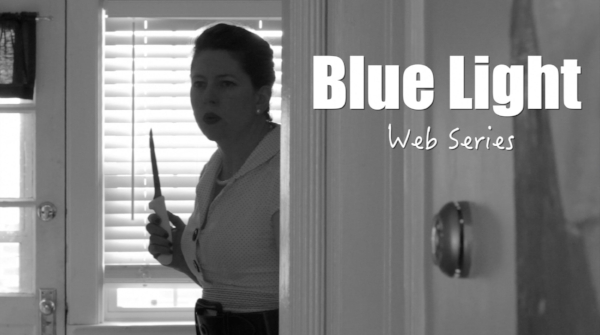
'Blue Light' Is An Excursion Into Sci-Fi & Hitchcockian Horror

March 27, 2017 by Rod T. Faulkner in Science Fiction

One trait of the most affecting of Alfred Hitchcock's films was his uncanny ability to take seemingly ordinary characters and disrupt their lives with strange, often macabre, circumstances.

The new sci-fi horror web series BLUE LIGHT definitely follows in this tradition.

The series tells the story of Mildred (Eileen O'Donnell), a housewife living in the year 1957.  

One afternoon, after returning home from running errands, she makes an extraordinary discovery.

She begins receiving bizarre messages from strangers - through her television set.

People who are in great emotional distress and oddly dressed, but are all bound by one chilling narrative: they each have had a life-altering encounter with an unearthly blue light.

Is Mildred delusional, or are people from the future really communicating with her?  If so, how is this possible, and why is she the focal point of this paranormal activity?

These tantalizing questions are at the heart of the mystery.

Written and directed by Miceal O'Donnell for Cagesafe Productions, BLUE LIGHT manages to captivate due to its central mystery, as well as its commendable production values, namely: 

  • O'Donnell's harried portrayal of a woman whose typical suburban life has been plunged into the surreal

  •  detailed period props, set dressings, and costumes

  •  black and white cinematography that lends the project a 1950s verisimilitude

  • the disturbing and compelling vignettes from the future

Watch the debut episode of BLUE LIGHT here ...

The series is currently ongoing with new episodes released each Tuesday, available via its YouTube channel.


Help Keep The 7th Matrix Independent and Ad-Free!

We also accept donations via Bitcoin using this address:

1EdGZQu1hcpzTYiTzoBD66bFC6ubH1pVL1

March 27, 2017 /Rod T. Faulkner
blue light web series, blue light scifi web series
Science Fiction
Image property of TK2 Films

Image property of TK2 Films

Sci-Fi Short Film Spotlight: RUNAWAY

March 11, 2017 by Rod T. Faulkner in Science Fiction, Short Film

From films such as The Terminator and The Matrix, to television series Battlestar Galactica, Westworld and Humans, science fiction seems to have an endless fascination with the creation of true artificial intelligence/life, as well as what implications such an event would mean for the future of humanity.

In the sci-fi western short RUNAWAY by TK2 Films, the year is 2065. Sophisticated androids called "synthetics" have become a new servant class.

Incidentally, two years prior, the synthetics became fully self-aware in a event dubbed "the awakening."

As a result of becoming sentient, synthetics now desire freedom and the same rights as human beings. Driven by the fear of being supplanted as the dominant species on earth, human society begins a brutal, violent pushback.

Deadly bounty hunters known as "darkcoats" have been assigned to apprehend fugitive synthetics alive or dead.

One darkcoat named Renzler (Rico E. Anderson) views his duties as nothing more than a way to earn an income. However, his partner Barrett (Paul Lang) has a far more militant view.

He hates synthetics. Believing they are "the devil's work," he wants to rid the world of them.

Image Property Of TK2 Films

Image Property Of TK2 Films

After encountering a fugitive synthetic named Maria (Callie Bussell), along with synthetic sympathizers Mason (Ed Trucco) and his companion Louise (Caroline Rankin), Renzler is forced to reconsider his beliefs regarding the plight of the artificial humans. This strains his already tenuous partnership with Barrett

When the two bounty hunters finally catch Maria, a fateful turn of events leads to an explosive reckoning.

RUNAWAY, written and co-directed by Harrison Heller, is not  just another sci-fi tale about self-aware androids. It is also a scathing commentary on the disturbing rise of racism, xenophobia, and extreme nationalism throughout the world.

"Check out our in-depth interview with RUNAWAY writer and co-director Harrison Heller here."

The synthetics are feared because they are different, and society, particularly those in power, perceive them as a threat to the status quo.

The short makes these observations strictly within the natural flow of the narrative - not with obnoxious, heavy-handed sermonizing. This is where the writing and cast shine. 

The dialogue feels naturalistic, delivered by actors who provide nuanced, compelling performances that are irresistibly engaging.

RUNAWAY is extremely well produced, with an overall aesthetic that is an intriguing mix of western and steampunk stylings juxtaposed with futuristic technology.

The end result is a gripping sci-fi short with visual flair that makes immersion into the story an effortless endeavor.

Watch RUNAWAY in its entirety here ...

Make sure to check out our fascinating interview with writer and co-director Harrison Heller here.


Help Keep The 7th Matrix Independent and Ad-Free!

We also accept donations via Bitcoin using this address:

1EdGZQu1hcpzTYiTzoBD66bFC6ubH1pVL1

March 11, 2017 /Rod T. Faulkner
runaway sci-fi western short film, TK2 films, sci-fi western, artificial intelligence
Science Fiction, Short Film
TearsInTheRainLogo

Sci-Fi Short Film Spotlight: TEARS IN THE RAIN (A BLADE RUNNER Film)

March 01, 2017 by Rod T. Faulkner in Science Fiction, Short Film

Tears In The Rain, the award winning South African sci-fi short by filmmaker Christopher Grant Harvey, is an unabashed love letter to the 1982 motion picture Blade Runner, and Philip K. Dick's novel Do Androids Dream Of Electric Sheep?

Set in Los Angeles in the latter part of the twenty-first century, the short stars Sean Cameron Michael as John Kampff, a mysterious law enforcement official who is tracking down a man named Andy Smith (Russel Savadier), who is suspected of being a replicant: an artificial being almost indistinguishable from humans.

With its haunting, 80s-inspired synthesized score, futuristic Los Angeles cityscape complete with flying cars, looming ultra-skyscrapers, and neon-haloed, grime covered streets, Tears In The Rain convincingly duplicates the dark dystopian aesthetic of Blade Runner.

However, the most important similarity to Blade Runner is the short's existential questioning of what it means to be human.

Watch the award winning Tears In The Rain here ...


Help Keep The 7th Matrix Independent and Ad-Free!

We also accept donations via Bitcoin using this address:

1EdGZQu1hcpzTYiTzoBD66bFC6ubH1pVL1

March 01, 2017 /Rod T. Faulkner
tears in the rain blade runner short film, blade runner, scifi short film
Science Fiction, Short Film
theywatchlogo

Sci-Fi Short Film Spotlight: THEY WATCH

February 17, 2017 by Rod T. Faulkner in Science Fiction, Short Film

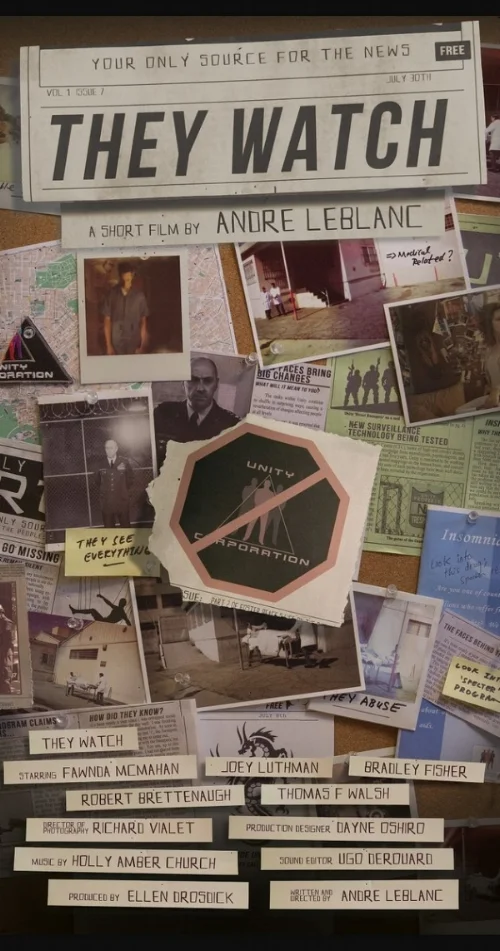
Set in an alternate near future, the sci-fi short film THEY WATCH is a dystopian tale about society under the control of UNITY, an omnipresent corporation.

Against this backdrop, single mother Ann Hawthorne (Fawnda McMahan) is growing increasingly concerned about the activities of her idealistic teenage son Peter (Joey Luthman), a outspoken critic of UNITY's Big Brother-esque policies.

Peter is on a dangerous course, because those who publicly question UNITY's totalitarian grip on the country tend to vanish.

One evening after trying to dissuade him into giving up his risky crusade, Ann uncovers a startling secret Peter has been keeping from her.

All the while, mother and son are unaware of two mysterious intruders inside their home who are observing them.

THEY WATCH's chilling vision seems disturbingly prescient in light of the current political climate here in the United States, as well as the increase in terrorism and extreme nationalism throughout the world.

What also makes this short film unique among similar stories is its focus on the human element.

Writer and director Andre LeBlanc has created a highly realized world, while also managing to paint an intimate portrait of a family in crisis.

THEY WATCH is no slouch on the production end either. The cast, cinematography, art design, musical score, and visual effects are all exemplary.

Watch THEY WATCH here ...


Help Keep The 7th Matrix Independent and Ad-Free!

We also accept donations via Bitcoin using this address:

1EdGZQu1hcpzTYiTzoBD66bFC6ubH1pVL1

February 17, 2017 /Rod T. Faulkner
they watch sci-fi short film, they watch andre leblanc
Science Fiction, Short Film
  • Newer
  • Older


The 7th Matrix © 2013 - 2025 Roderick T Faulkner